This website requires JavaScript.
Geopolitical mapping

Supply Chain Mapping

Summary

In a context of strained globalisation, CASSINI supports industrial and institutional actors in the mapping and geopolitical analysis of critical supply chains.

The objective is to decode structural dependencies, identify territorial vulnerabilities, and anticipate risks likely to affect the production and distribution of strategic goods.

Issue

Most European companies are embedded in globalised supply chains. Even when final production is located in Europe, certain components, raw materials, or active ingredients come from Asia, Africa, or other distant and often politically unstable regions.

The proliferation of geopolitical crises (armed conflicts, maritime tensions, political instabilities, international sanctions) has considerably increased the indirect exposure of European economic actors.

Understanding a supply chain therefore no longer consists solely of identifying suppliers: it involves analysing territories, trade routes, conflict zones, and strategic chokepoints.

Two Case Studies

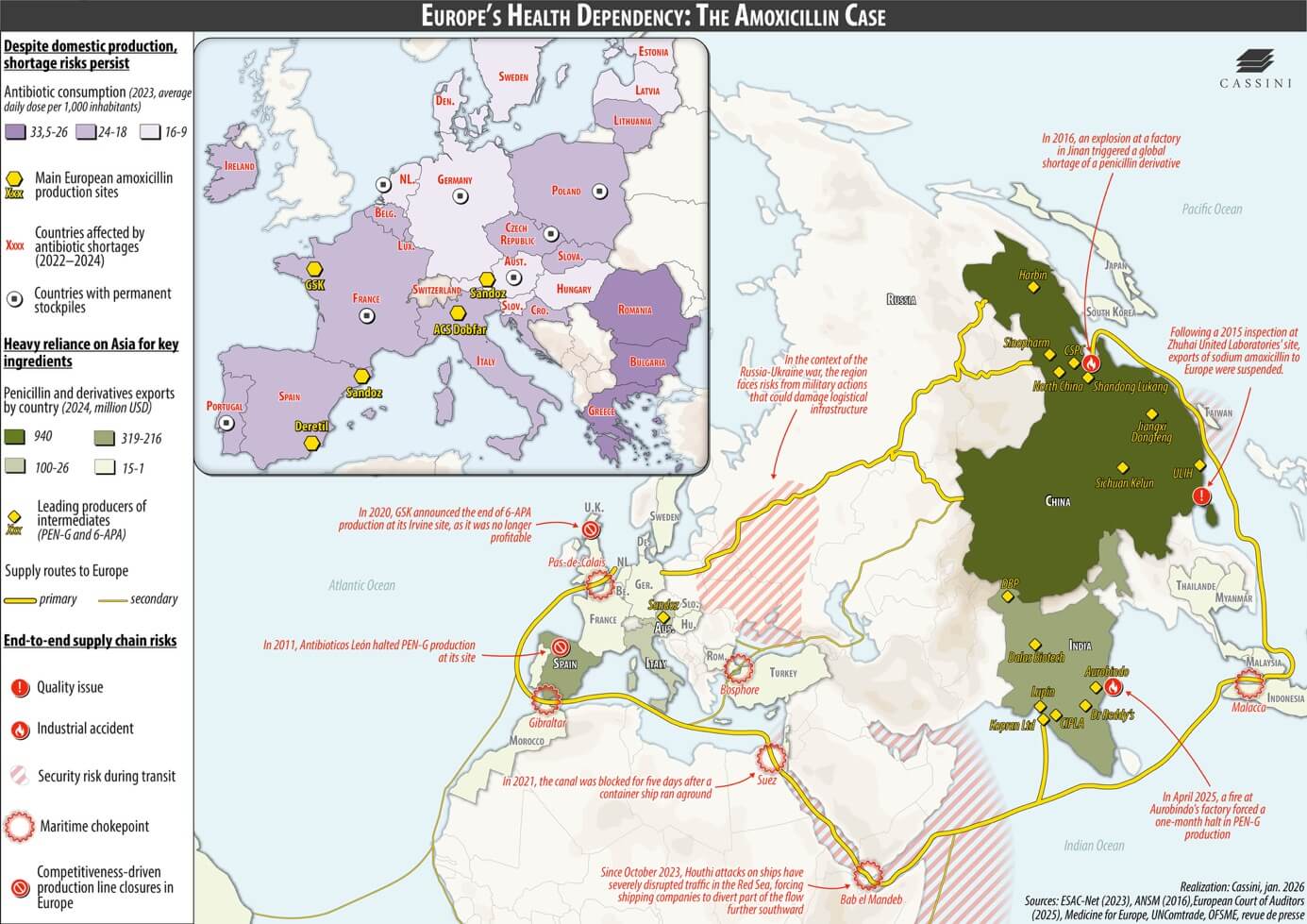
Case 1 — The amoxicillin supply chain


While Europe has industrial capacities to produce this essential antibiotic, certain key ingredients are manufactured in China and India.

Beyond local industrial risks (fires, labour disputes, regulatory constraints), the transport of active ingredients exposes the chain to maritime and land routes crossing geopolitically sensitive zones: the Red Sea and the Strait of Bab el-Mandeb threatened by armed groups in Yemen, the Eurasian space affected by the Russo-Ukrainian war, and more broadly international trade tensions.

The mapping carried out by CASSINI highlights the multiple territorial dependencies, logistical vulnerability points, and strategic corridors essential to production continuity.

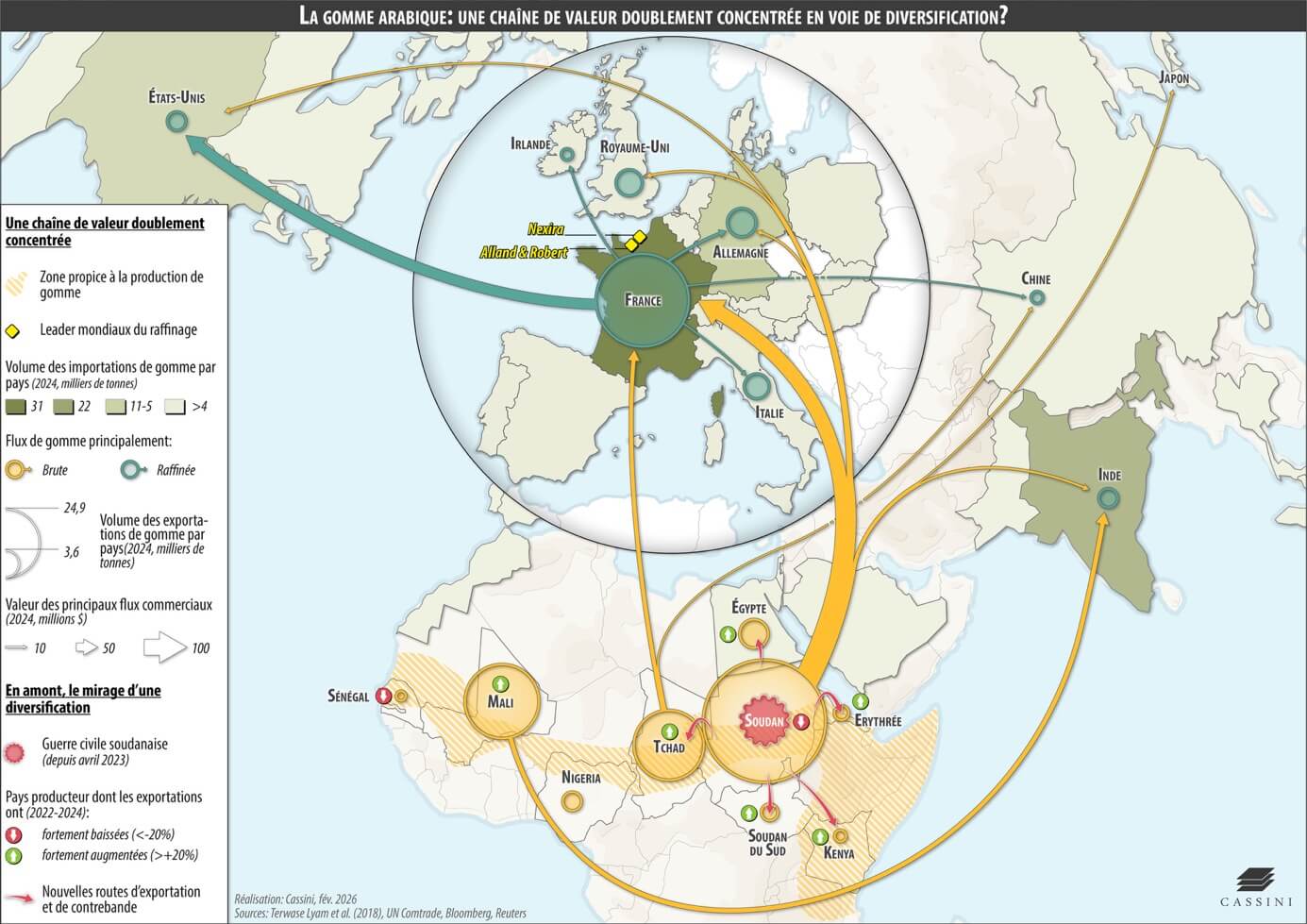
Case 2 — Gum arabic

Gum arabic, an essential raw material for the food, cosmetics, and pharmaceutical industries, is largely dependent on production concentrated in Sudan.

This country, marked by decades of internal conflicts, constitutes a critical link in the global chain. Local geopolitical analysis makes it possible to identify production zones, export routes, and strategic exit points. The mapping illuminates the exposure of major European refining actors, whose activities depend on the stability of these territories. It highlights the systemic vulnerability of entire industries to localised instability.

Strategic Value of Mapping

In both cases, the map goes beyond a simple logistical representation. It enables:

  • identifying critical dependencies;
  • visualising strategic corridors;
  • prioritising local and global risks;
  • evaluating disruption or rerouting scenarios.

Geopolitical mapping thus transforms an abstract supply chain into a concrete territorial reading, facilitating crisis anticipation and the preparation of resilience strategies.

Impact

CASSINI's work provides professional actors with a precise view of their territorial exposure. It enables vulnerabilities to be objectified, investment decisions to be secured, and potential disruptions to be anticipated.

In a world marked by strategic instability, the geographical understanding of supply chains becomes a central lever of economic sovereignty and industrial continuity.

This case illustrates CASSINI's ability to combine geopolitical analysis, strategic mapping, and risk assessment in order to support actors facing critical dependencies.

Étude de cas précédente

Geopolitical mapping
Observatory for the Security of Energy Flows and Raw Materials (OSFME)
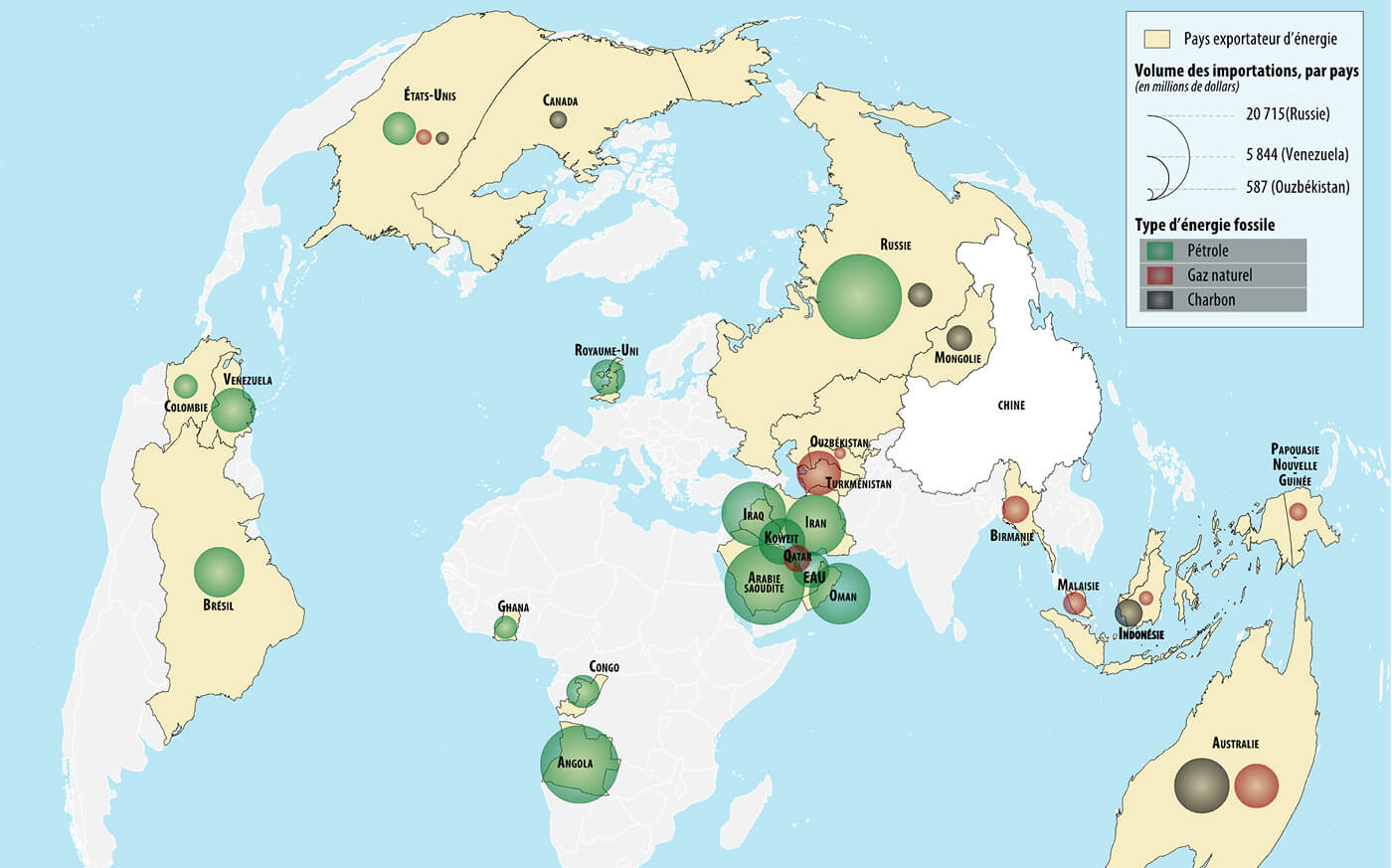
Since 2019, CASSINI has contributed to the Observatory for the Security of Energy Flows and Raw Materials (OSFME) on behalf of the DGRIS of the Ministry of Armed Forces, in order to analyse the energy strategies of major powers and strengthen France's strategic anticipation capacity.

Étude de cas suivante

Prospective map of the Lake Chad region — geopolitical and climate scenarios for 2050 (Chad, Niger, Nigeria, Cameroon)
Strategic foresight
Geopolitical Scenarios around Lake Chad by 2050
As part of the preparation for a Conference of the Parties (COP), WWF commissioned CASSINI to conduct a prospective exercise on the geopolitical evolution of the Lake Chad region by 2050, based on four possible climate trajectories.