
David Amsellem
Partner
Partner
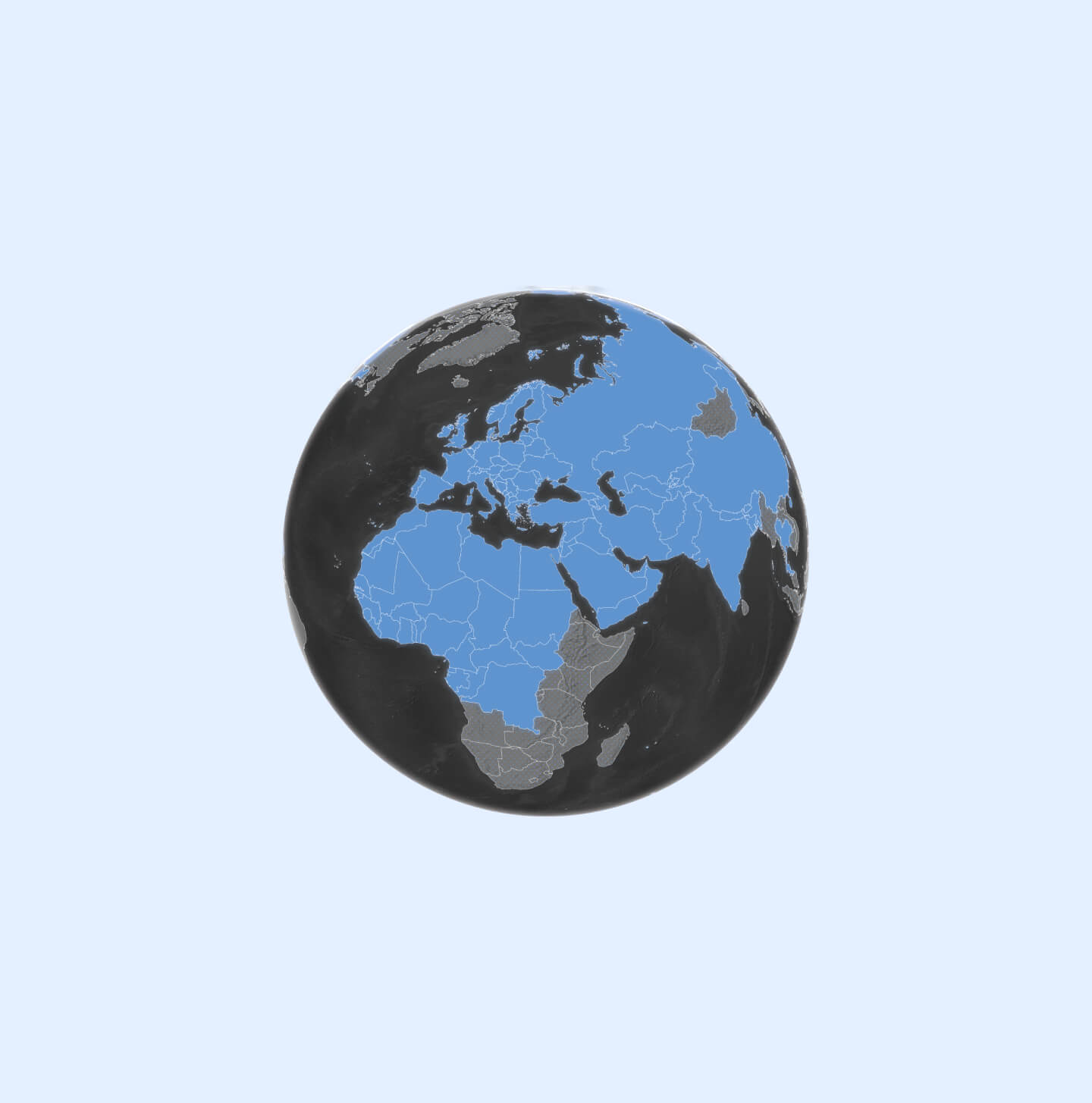
For several years, CASSINI has developed deep expertise in strategic regions through research, field investigations, open-source data collection, and a strong command of local languages and contexts. Our teams focus particularly on the following areas:
These regions are the focus of continuous monitoring, research, and cartographic production. This close familiarity with local stakeholders, territories, and dynamics enables us to deliver nuanced, contextualised analyses that decision-makers can act on immediately.
Beyond these established areas of expertise, CASSINI can also operate in new territories whenever strategic needs arise. Our academic roots enable us to draw on a structured network of researchers and experts with a detailed understanding of the field, local stakeholders, and the political dynamics specific to each region. This capacity for mobilisation is one of the firm’s distinctive strengths: it provides access to contextualised analysis and first-hand information, while ensuring the methodological rigour and intellectual independence of our work.
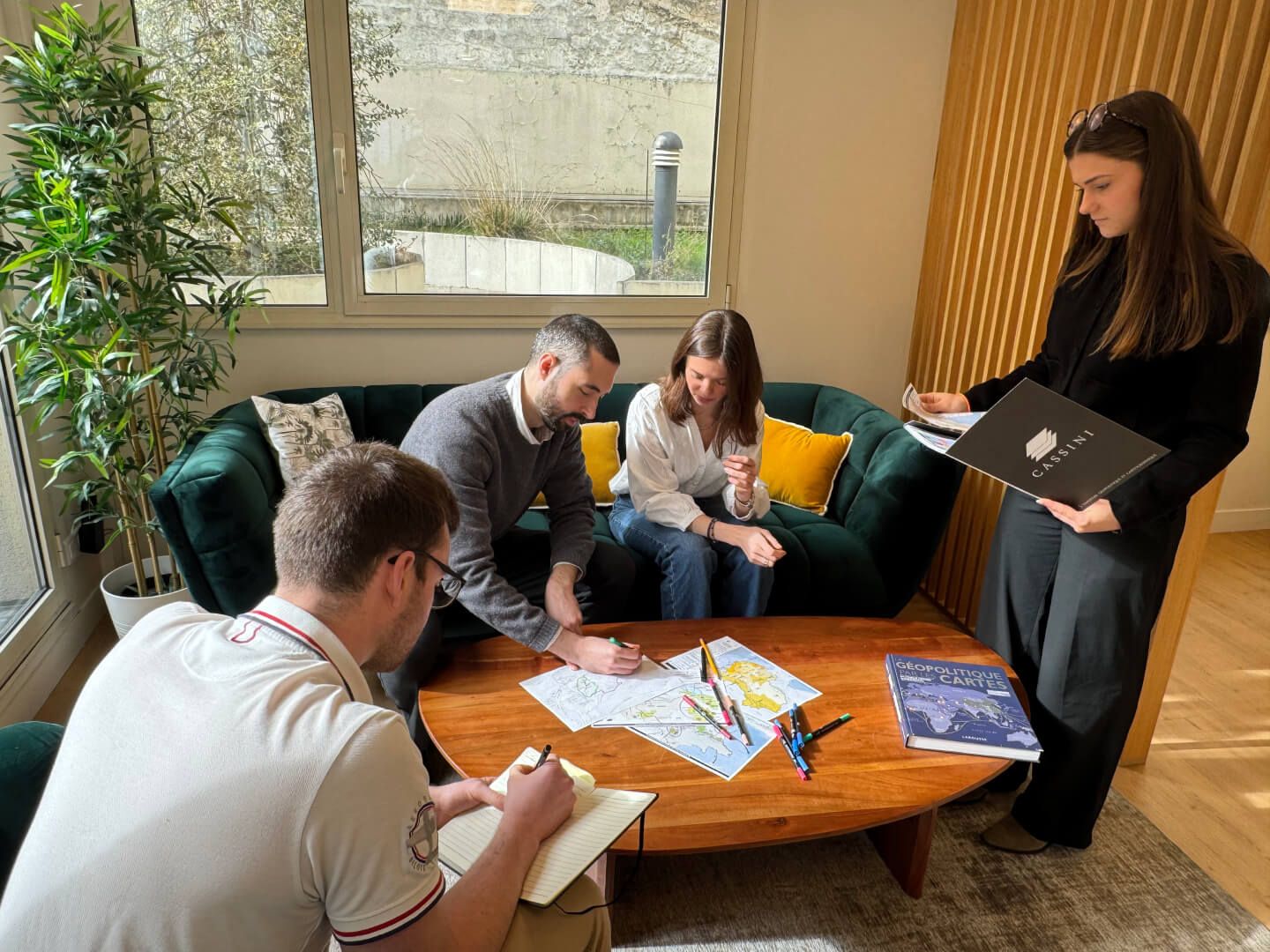
Our work focuses on strategic sectors shaped by political rivalries, territorial constraints, economic dependencies, and reputational exposure.
We analyze the processes of border delimitation and management, migration control and management policies, as well as the geopolitical and geoeconomic strategies deployed by regional and global powers in competitive situations.
We examine the actors operating in cyberspace, their influence strategies, the narratives they construct, and the channels through which they are disseminated. This approach enables us to identify the logics of information confrontation, destabilisation campaigns, and the mechanisms through which opinions and perceptions are shaped.
Highways, airports, rail networks, and urban transport systems all generate significant economic, social, and legal effects. We analyse their territorial impact, the reconfigurations they drive, and the tensions that may arise between project developers, public authorities, and local communities.
We work across the entire value chain, from resource extraction (hydrocarbons, minerals) to end uses (electricity, batteries, fuels). Supply chains, critical infrastructure, structural dependencies, and systemic vulnerabilities are central to our analysis, helping to assess risks related to energy security and territorial planning.
Climate and energy transitions require trade-offs with far-reaching consequences. Water management – access, cost, treatment, and transport – is becoming an increasing source of tension. We analyse these dynamics through the lens of competing uses, territorial rivalries, and the risks associated with resource scarcity.
Securing supply chains has become a major challenge for public and private actors. We assess vulnerabilities across value chains, as well as geopolitical and legal risks, including compliance, due diligence, and sanctions exposure.
In unstable and highly mediatised contexts, reputation is a strategic asset. We analyse reputational risks linked to territorial presence, partnerships, economic dependencies, and local controversies, as well as the information dynamics likely to affect an actor’s image and legitimacy. This perspective helps anticipate crises, identify weak signals, and protect institutional or corporate credibility.
Alongside our core team, we draw on an academic network of several dozen specialists in France and abroad, either to expand a project team or to provide specific thematic or geographic expertise as required.
Our consultants work on geographic areas they know in depth. They speak the languages of their regions of expertise, including lesser-spoken dialects, and rely on long-standing field knowledge. This close familiarity enables them, when necessary, to activate local networks and information channels that support analysis and a nuanced understanding of context.


Our approach is based on the method of geopolitical analysis developed by the geographer Yves Lacoste and refined over more than twenty years at the French Institute of Geopolitics (University of Paris 8).
This approach aims to:
We systematically adopt a multi-scalar approach, enabling the study of a phenomenon across all the geographic levels on which it unfolds – from the local to the international – to identify the key explanatory and influencing factors.
Our analyses are grounded in scientific sources and cross-checked data, supplemented where necessary by interviews, field research, and open-source intelligence (OSINT) collection. Assumptions are made explicit, limitations are identified, and information is prioritised to frame interpretation.
The results are presented in formats designed to support understanding: geopolitical maps, timelines, organisational charts, diagrams, and relational network graphs of stakeholders. These visualisations structure the assessment, facilitate sharing, and accelerate decision-making.
Our methodology follows a complete continuum – from collection to analysis, then visualisation and delivery – to ensure the quality of the work and the robustness of the conclusions, whether in studies, maps, or interactive tools.