Observatory for the Security of Energy Flows and Raw Materials (OSFME)
Since 2019, CASSINI has contributed to the Observatory for the Security of Energy Flows and Raw Materials (OSFME) on behalf of the Directorate-General for International Relations and Strategy (DGRIS) of the Ministry of Armed Forces.
The objective of this observatory is to analyse the energy strategies of major powers, identify vulnerabilities related to critical resources, and strengthen France's strategic anticipation capacity in the face of global energy reconfigurations.
In a context marked by the energy transition, rising global demand, and growing rivalries between powers for control of resources, energy and mineral flows have become central geopolitical objects.
For the Ministry of Armed Forces, it was not merely a matter of tracking markets or production volumes, but of understanding power dynamics, structural dependencies, and disruption risks affecting Europe and France.
Infrastructure, maritime routes, extraction zones, industrial value chains, and electricity networks all constitute potential vulnerability points. Understanding them requires a fine-grained territorial approach capable of combining quantitative data with political dynamics.
The OSFME was therefore designed as a strategic analysis tool in service of public decision-making.

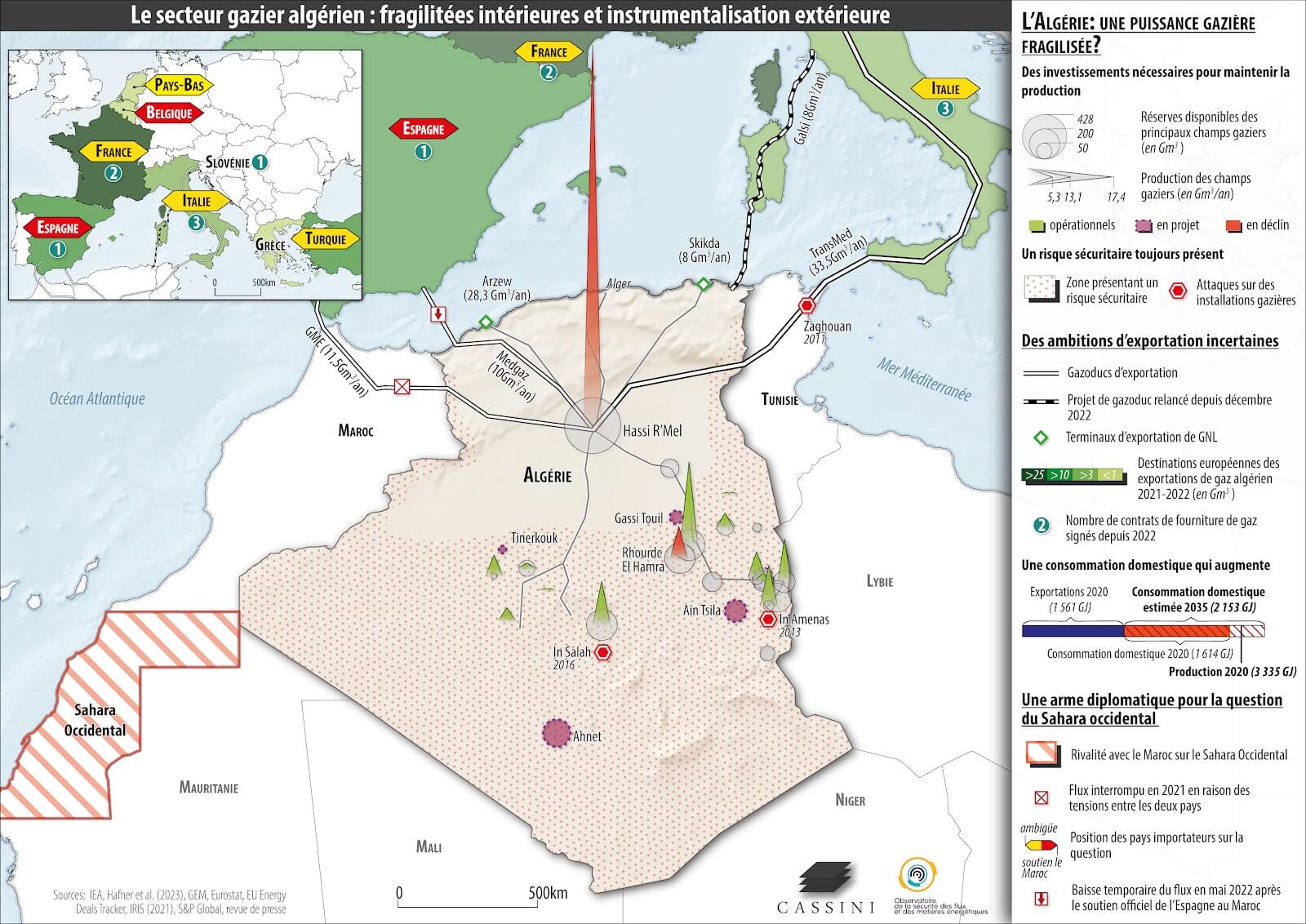
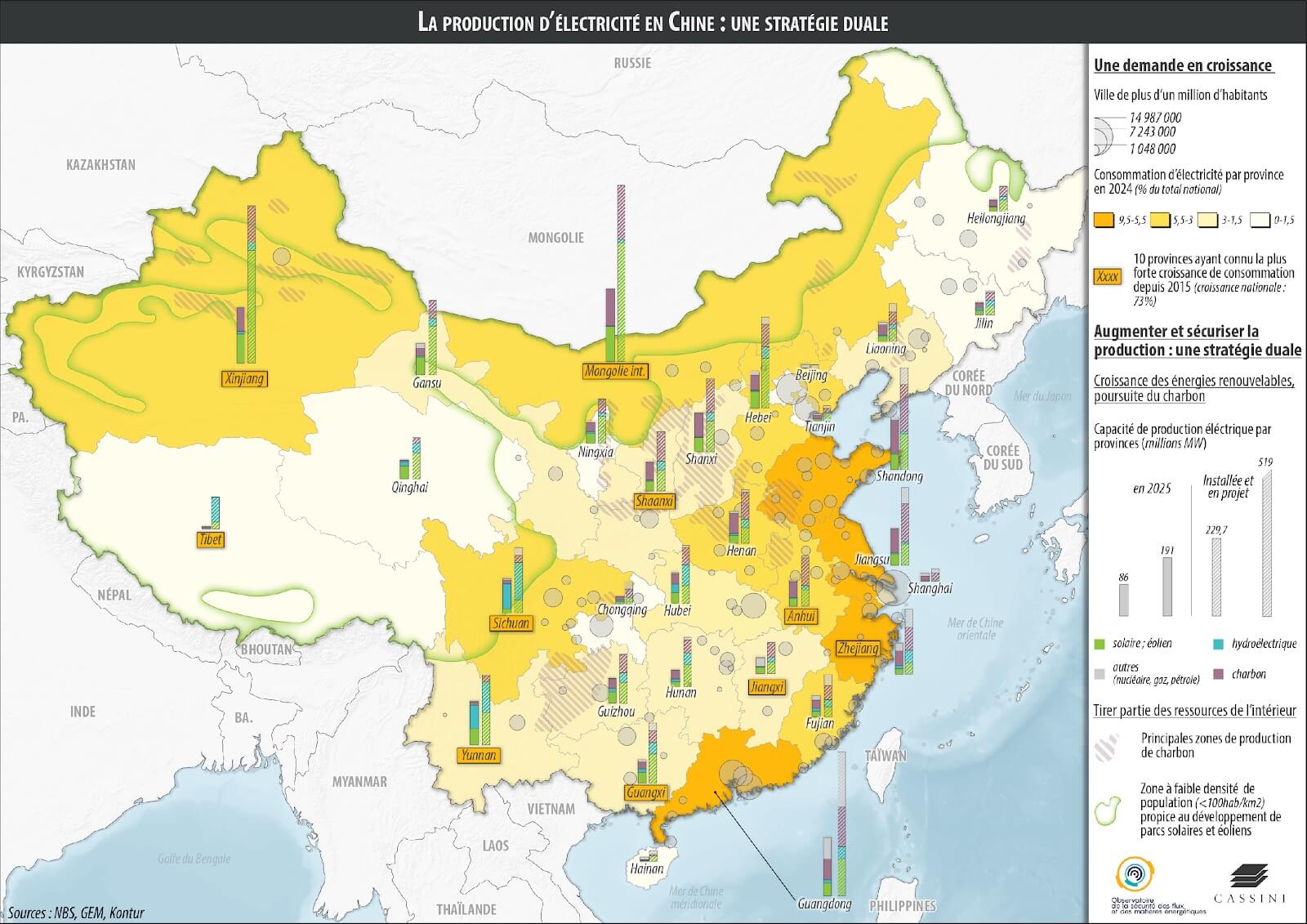
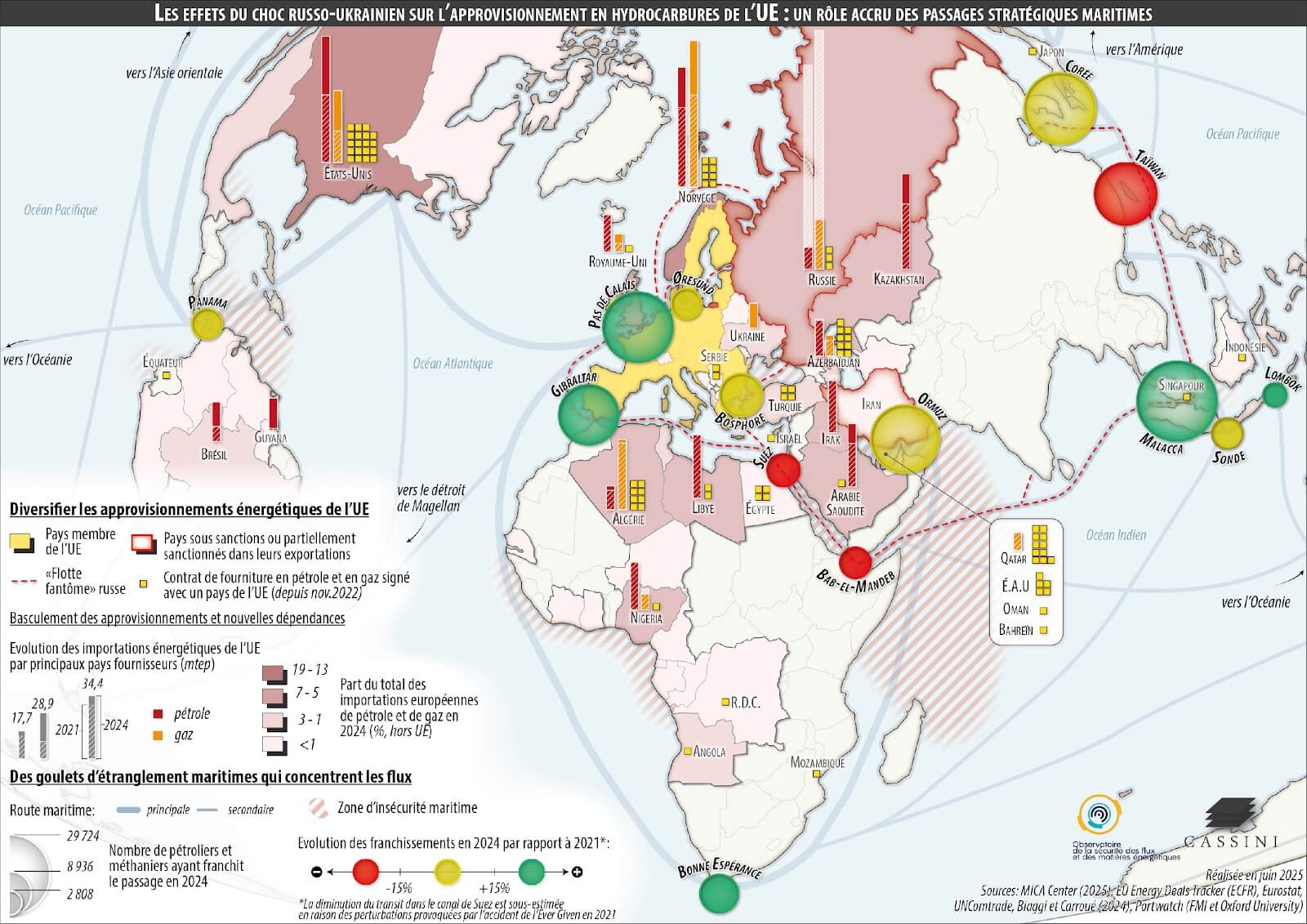
The maps produced within the framework of the Observatory combine precise data on the production, flows, infrastructure, and consumption of energy materials with qualitative information relating to territories, political risks, and state strategies.
The sources used include international databases, corporate activity reports, specialised academic publications, and institutional documents. This cross-referencing makes it possible to go beyond a purely economic reading to integrate the logics of power and dependency.

The methodology implemented is based on a geographical approach structured in superimposed thematic layers. Each map is preceded by a research phase aimed at clearly defining the strategic message to be conveyed and the relevant variables to be mobilised.
Geographic information system (GIS) tools are then used to process, georeference, and articulate heterogeneous data. Vector mapping is used to visually prioritise issues, distinguish critical zones, and make territorial vulnerabilities immediately legible.
This method transforms complex masses of data into strategic analysis instruments directly usable by decision-makers.

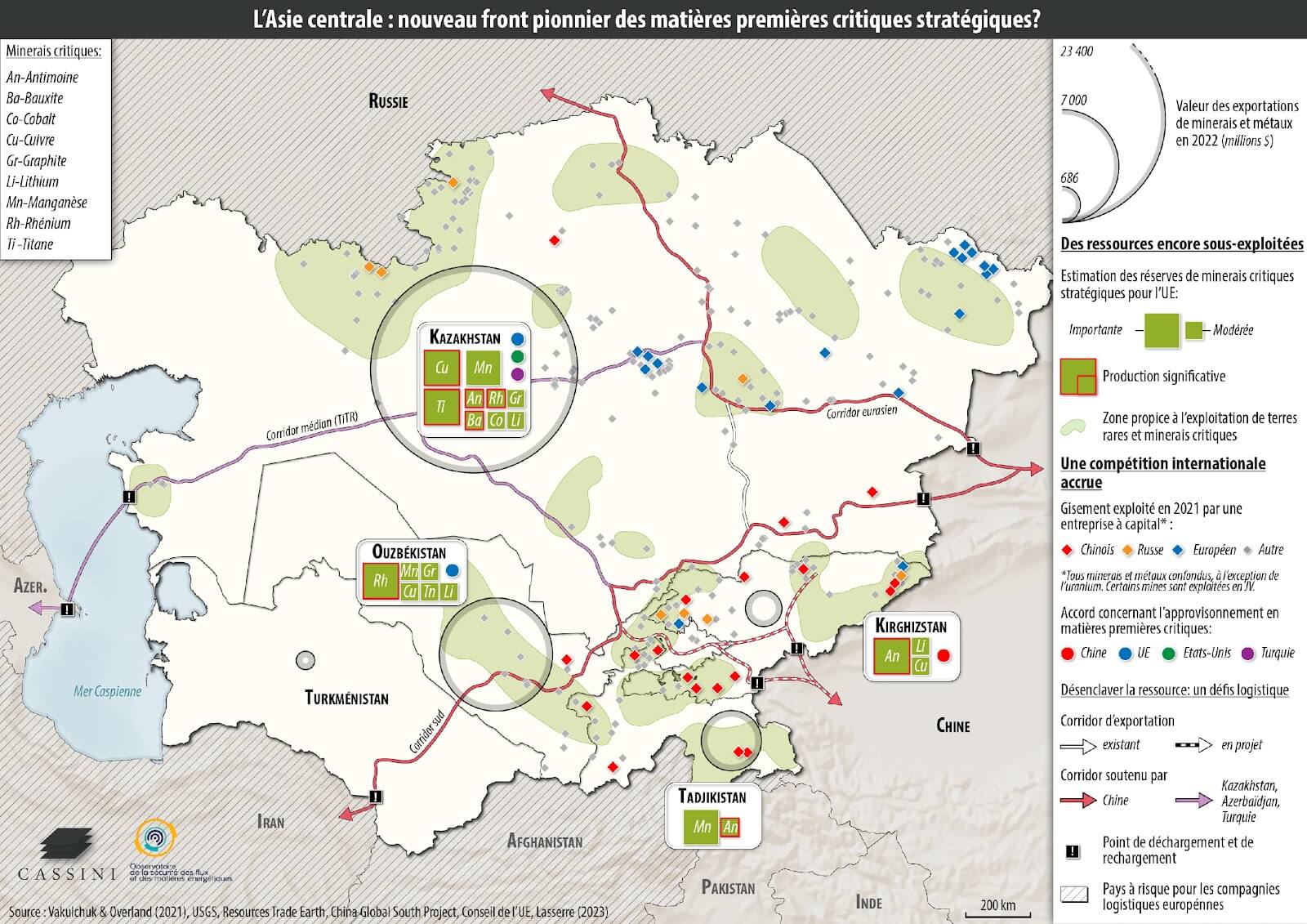
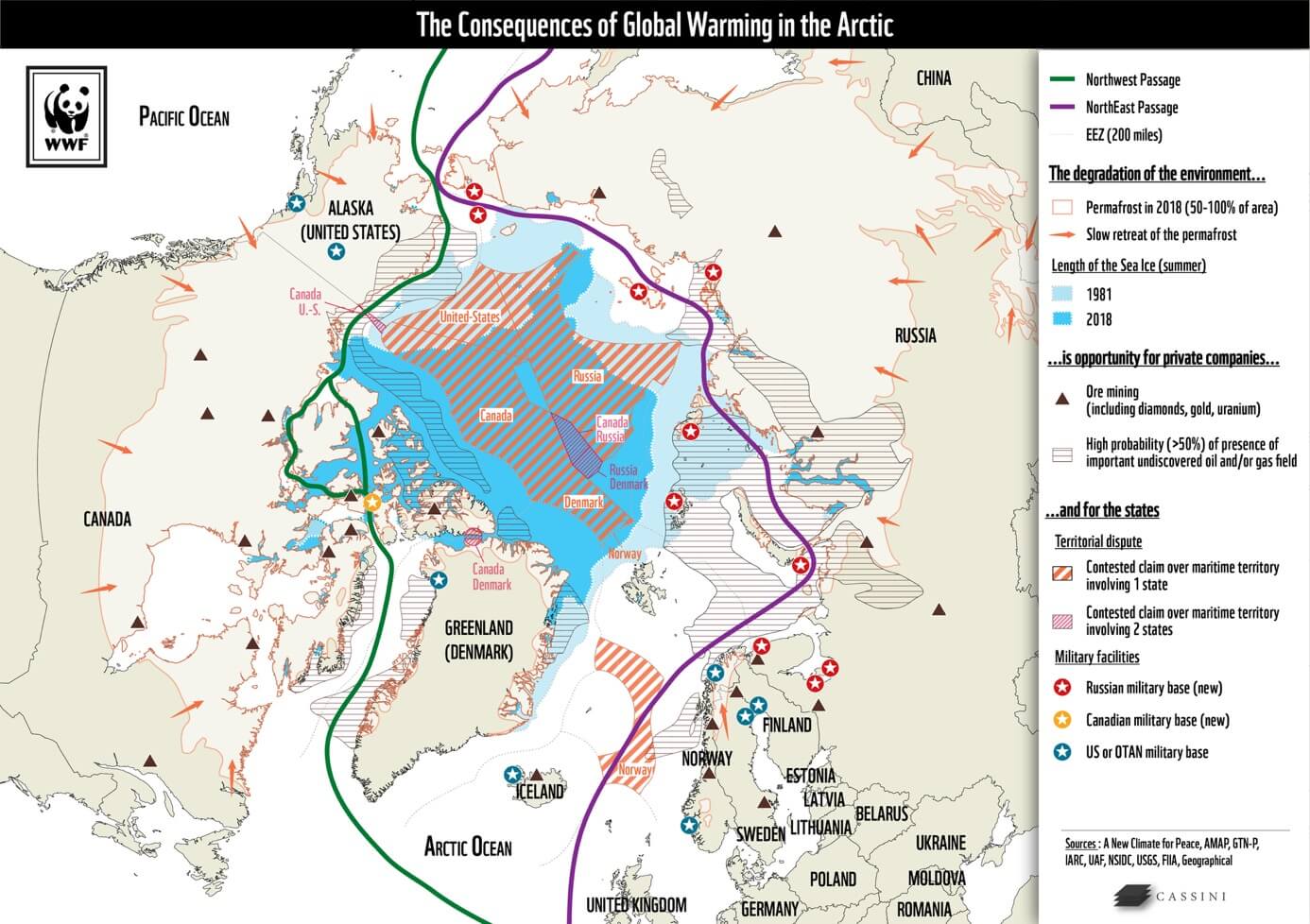
Since 2019, more than seventy original maps have been produced within the framework of the OSFME. They cover a variety of themes: hydrocarbon supply, dependence on critical minerals, industrial transformation, electricity networks, strategic straits, and logistics corridors.
The Observatory has strengthened the Ministry of Armed Forces' anticipation capacity in the face of global energy reconfigurations. It offers a cross-cutting reading of the issues, articulating global and regional scales, and integrating economic, political, and strategic dimensions.
Beyond the institutional project, this experience has enabled CASSINI to build a unique methodological expertise in mapping energy and industrial dependencies. The team now has a structured repository of georeferenced databases and specialised analytical tools, deployable in service of both public and private actors facing economic security challenges.