Information Monitoring System
To meet several needs of the Ministry of Armed Forces, CASSINI designed and deployed strategic monitoring systems covering three major linguistic spaces: the Arabic-speaking world, the Russian-speaking space, and the French-speaking regions of West Africa.
The objective was to provide the ministry with an anticipation capability grounded in local dynamics, integrating the linguistic, media, and political specificities of each of these environments.
The systems combine structured data collection, linguistic expertise, and multi-scale geopolitical analysis in order to transform a dispersed information flow into a decision-support tool.
The client needed to simultaneously monitor several spaces characterised by high geopolitical intensity and the rapid circulation of competing narratives. International sources did not allow for early enough detection of ongoing developments, which were often first perceptible in local media and national-language social networks.
In these environments, political tensions, social movements, and influence strategies rarely emerge within a legible, centralised framework. They appear in fragmented, sometimes unstable spheres where institutional information, activist communication, and disinformation coexist.
The challenge was therefore to structure observatories capable of identifying weak signals, contextualising them, and linking them to broader territorial dynamics.

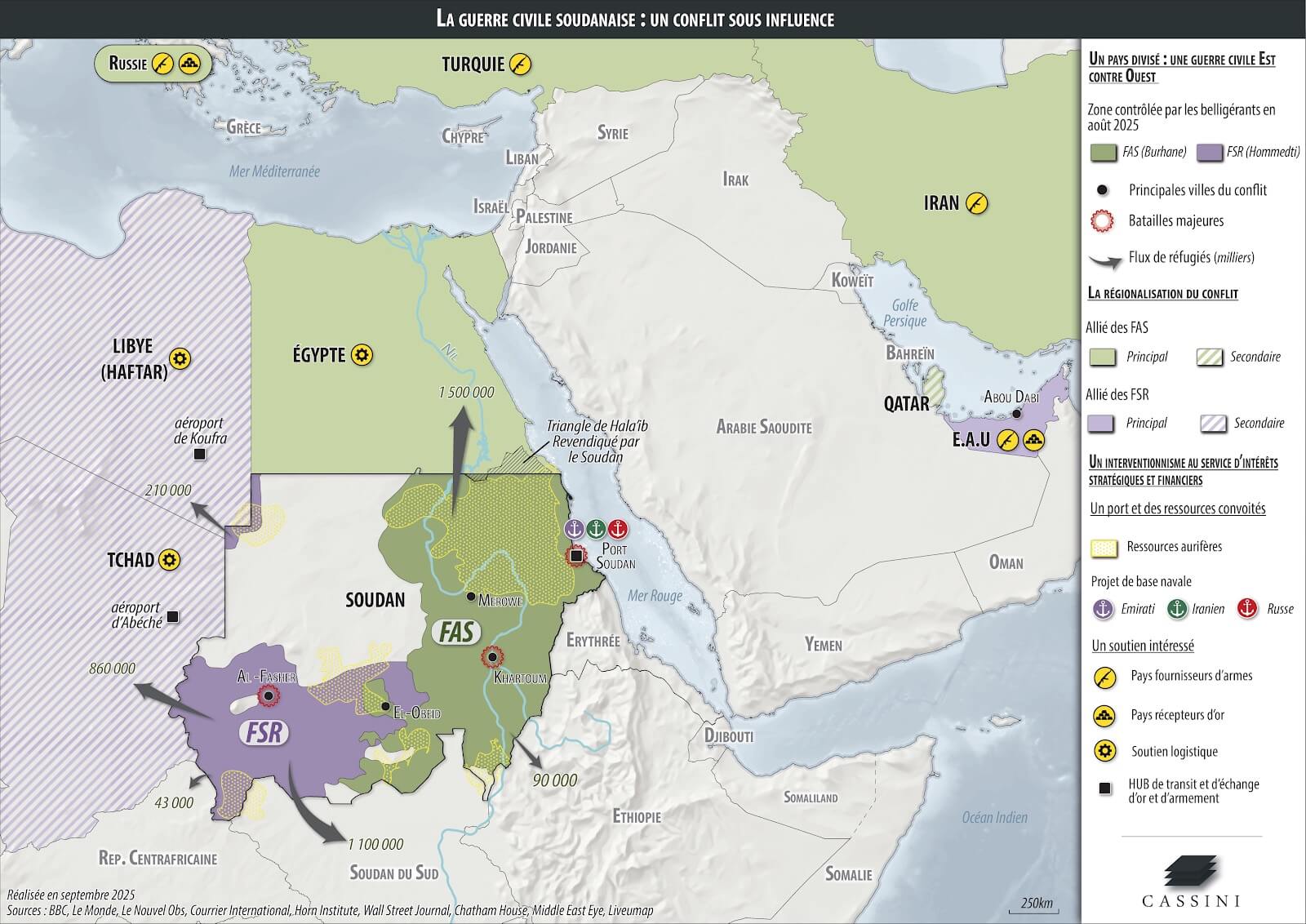
In the Arabic-speaking space, linguistic diversity (standard Arabic, dialects, hybrid digital usage) requires a thorough understanding of communicational practices across an immense region facing vastly different political challenges and cultural issues.
In the Russian-speaking space, analysis must integrate the circulation between institutional media, social platforms, and parallel channels. The challenge is not only the content itself, but the dissemination trajectory of a narrative.
In French-speaking Africa, informational dynamics blend established media, informal digital spheres, and local grievances. Understanding national contexts is essential to distinguish a short-term crisis from a structural shift.

The system is based on large-scale, structured open-source collection: local press, institutional channels, social networks, specialised publications, and public databases; supplemented by information from closed channels (WhatsApp groups, Telegram channels) or leaked data.
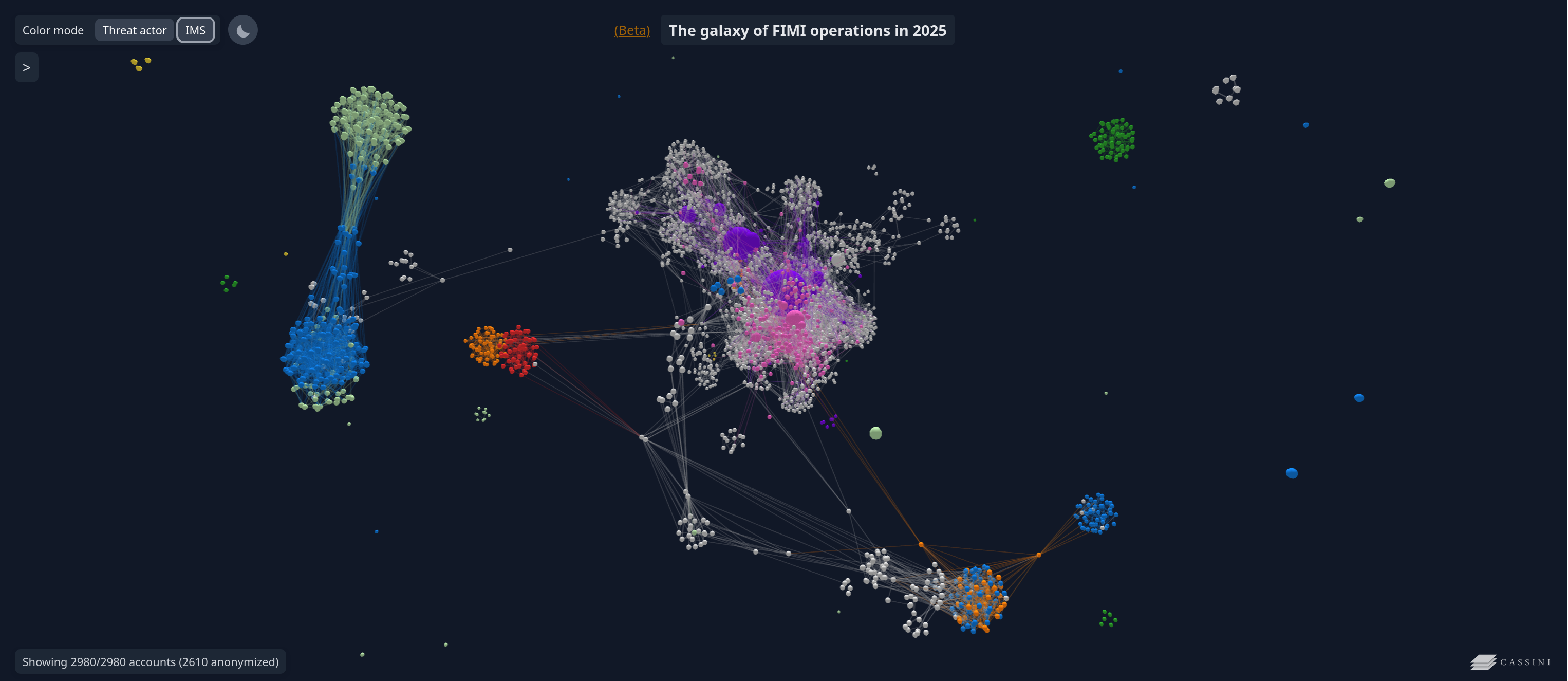
The tools developed by CASSINI then enable tailored processing (lexicometric analysis, semantic mapping) to extract the most relevant elements. Flows are organised and archived to allow tracking over time. Each significant piece of information is qualified by analysts, who assess its source, territorial scope, and potential impact.
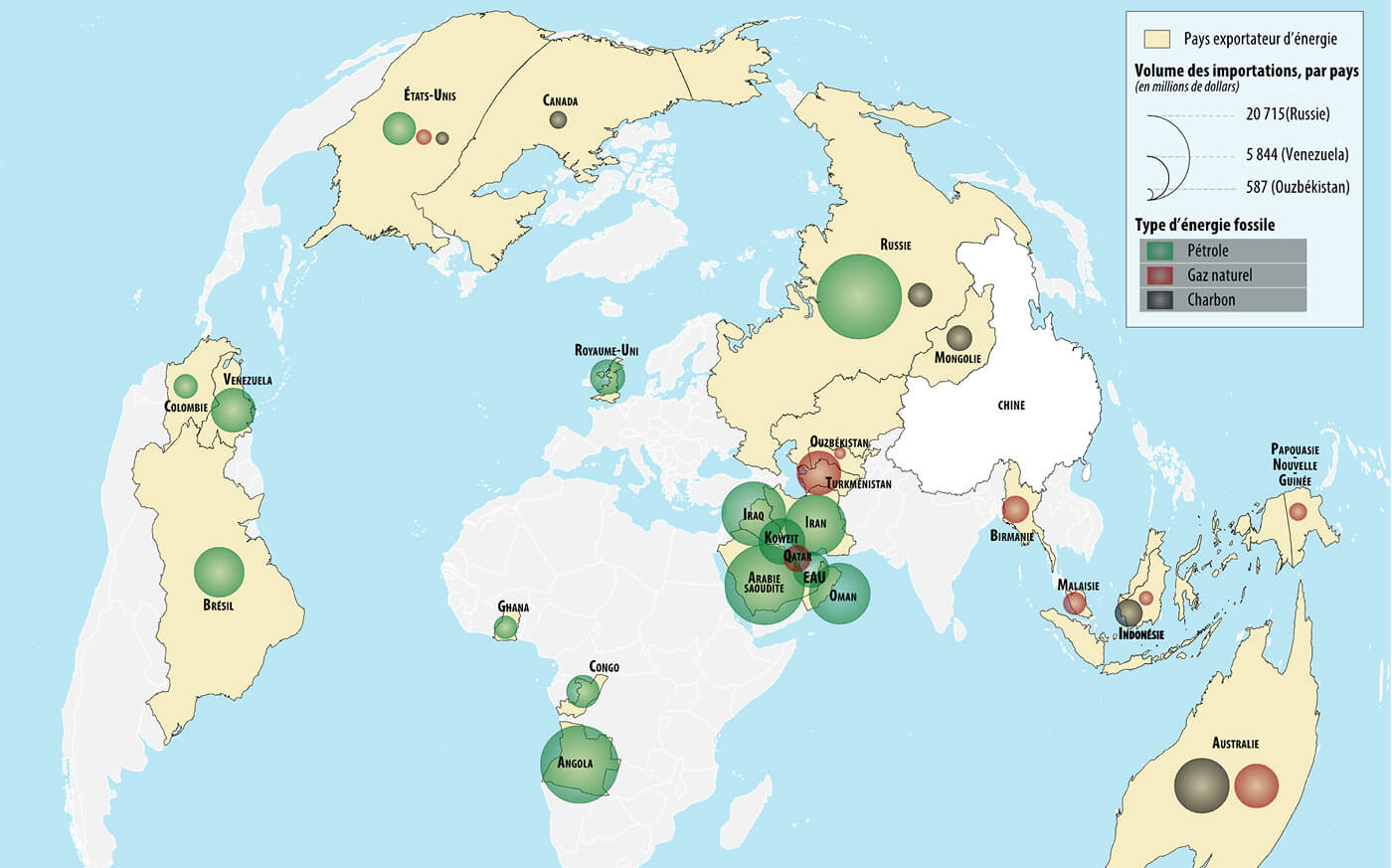
The monitoring ultimately relies on a multi-scale geopolitical reading. A local event is placed back in its national context, then assessed against regional and international balances. This approach avoids the artificial isolation of facts and enables an understanding of overall dynamics.
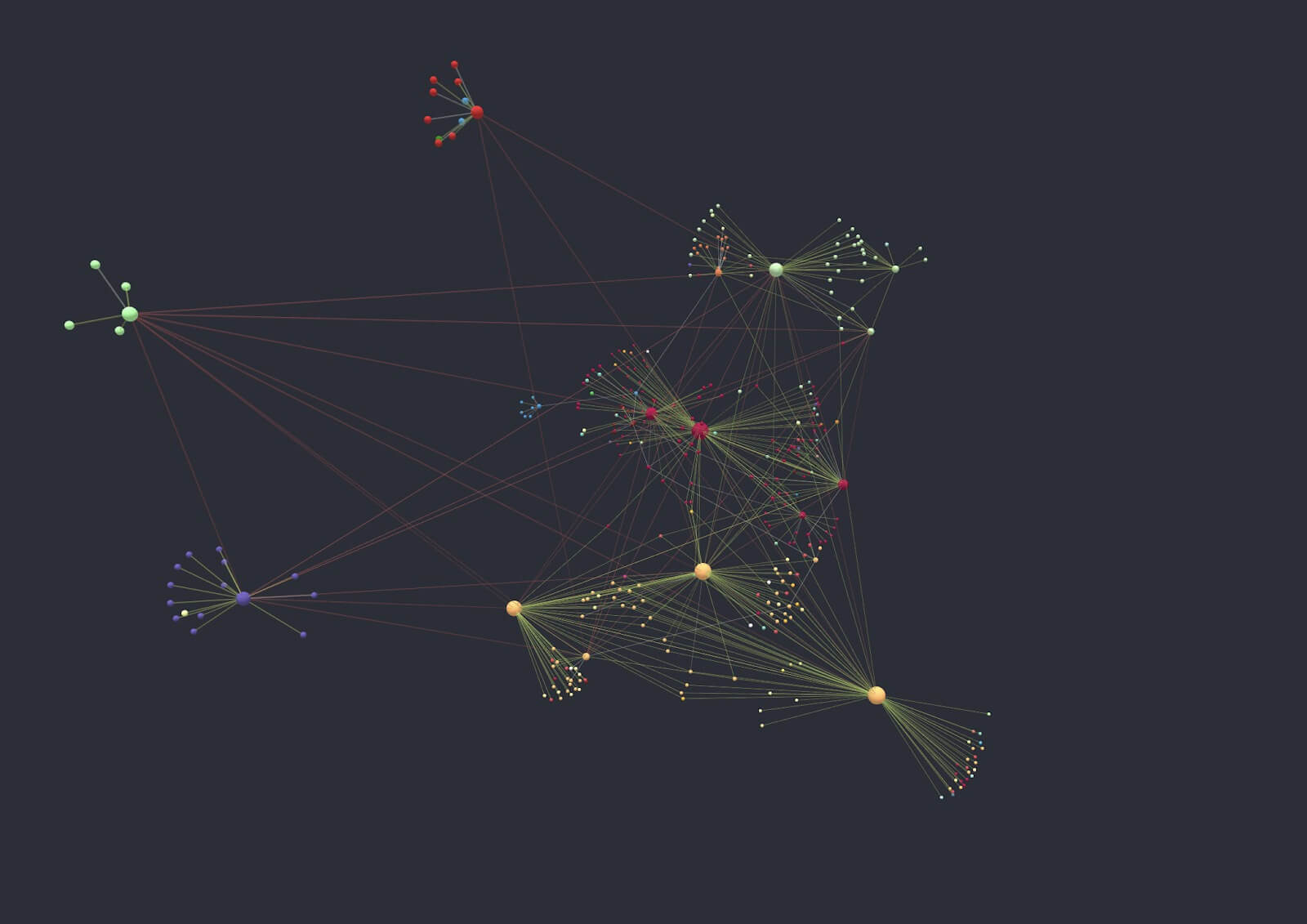
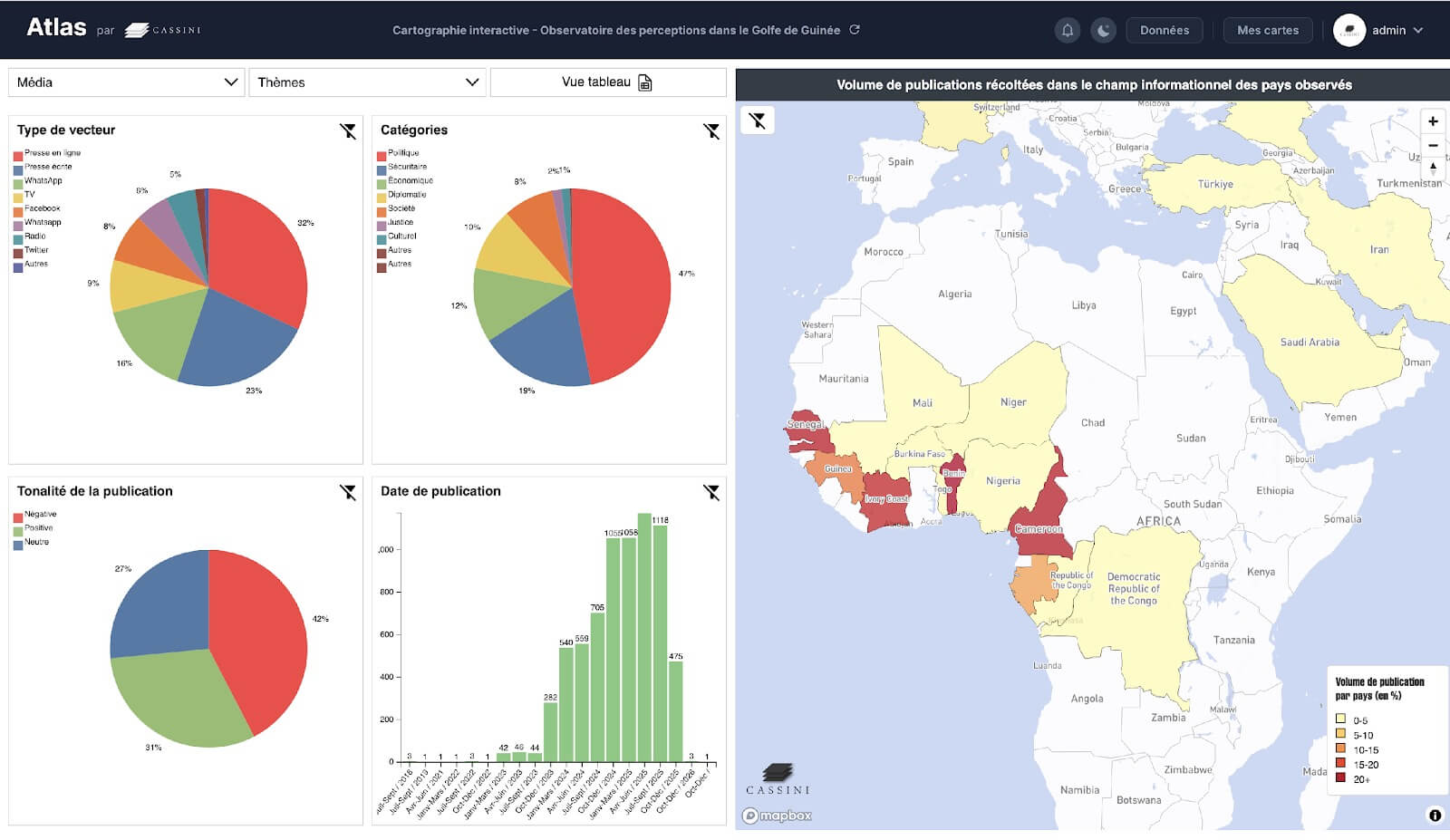
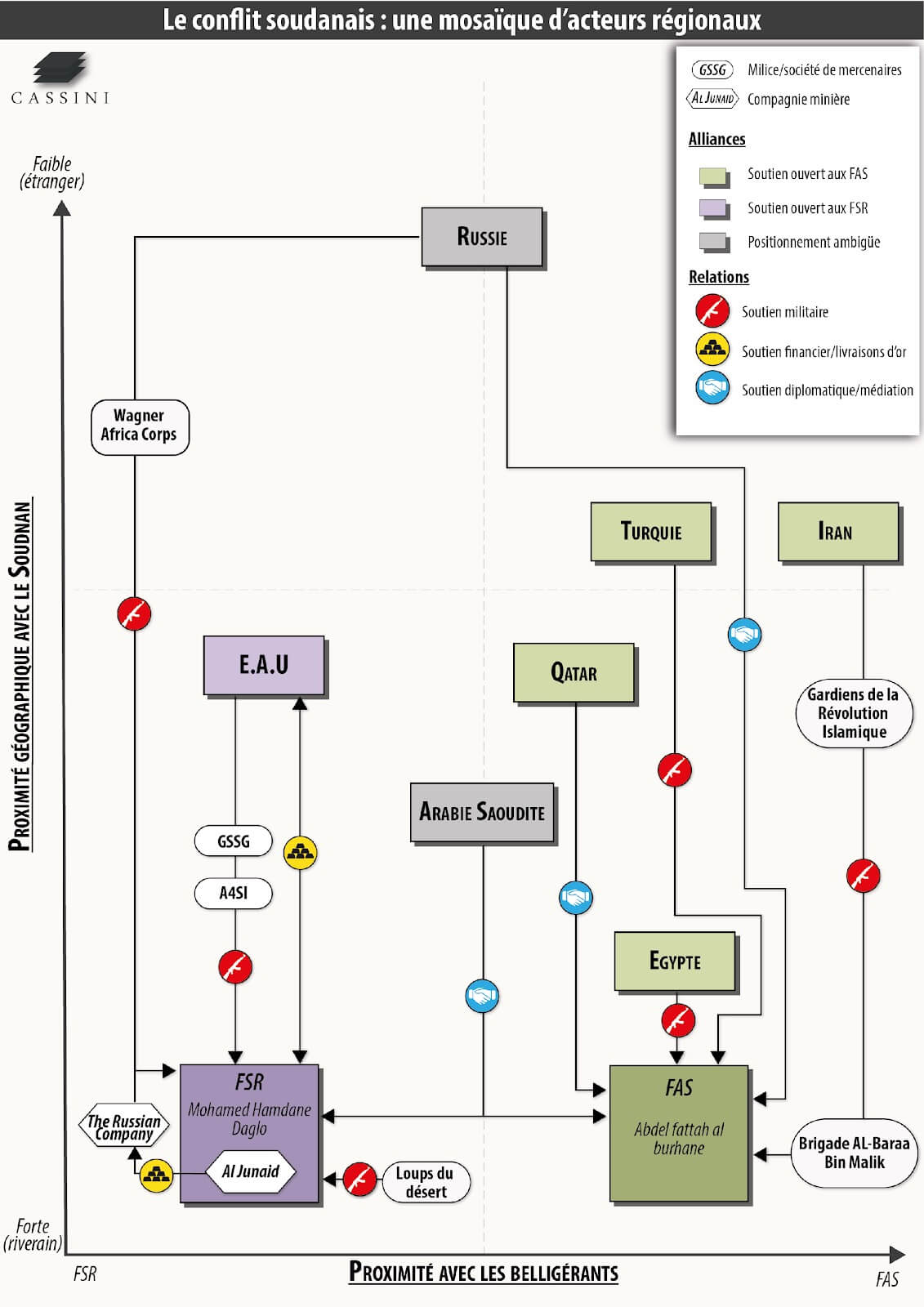
The system improved the client's anticipation capability by identifying, at an early stage, local dynamics likely to have a strategic impact on their activities or reputation.
Beyond the regular production of briefings and alerts, the system structured a memory of political and discursive developments across the three monitored spaces, strengthening the depth of analysis and the robustness of assessments.